History
Curriculum Intent: History
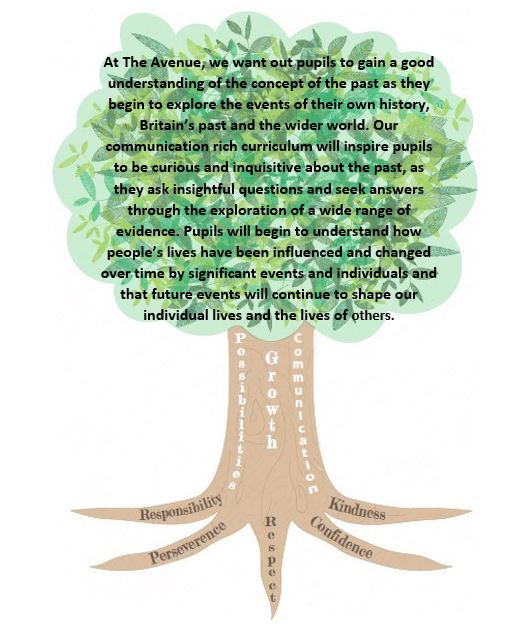
Whole school Curriculum vision for History
|
Possibilities To have high aspirations |
Our children will have the opportunity to explore their curiosity about the past, delving into global events and significant individuals that changed the world around us. We will aim to open up their own individual past, exploring how events shaped their lives and will continue to affect their futures. We will then expand this to explore evidence from national and global historical events and build upon the children’s knowledge, ability to question and use of key vocabulary. We will also open the children’s eyes to careers based around history such as an archaeologist or history teacher. |
|
Growth To recognise and celebrate their own individual journey |
Our children will begin to explore their own past through a historical lens, thinking about different events that have happened in their lifetime and how they have influenced their lives. They will then begin to expand this lens and consider events that are beyond their own personal past, beginning with the past of Britain and then the wider world. We will consider how these events and individuals have influenced our lives. Whilst also considering how we believe the world will continue to be affected by future events and key individuals. |
|
Communication To have high levels of oracy |
During their historical journey, our children will be exposed to a wide range of vocabulary that reflects the evidence based investigations we will conduct. During History learning, children will learn how to use subject appropriate vocabulary to discuss their observations of evidence, discuss their opinions and question events. The children will be able to use their historical vocabulary to explain their own ideas, whilst responding to others and collaborating with peers during discussions and investigations. |
Implementation
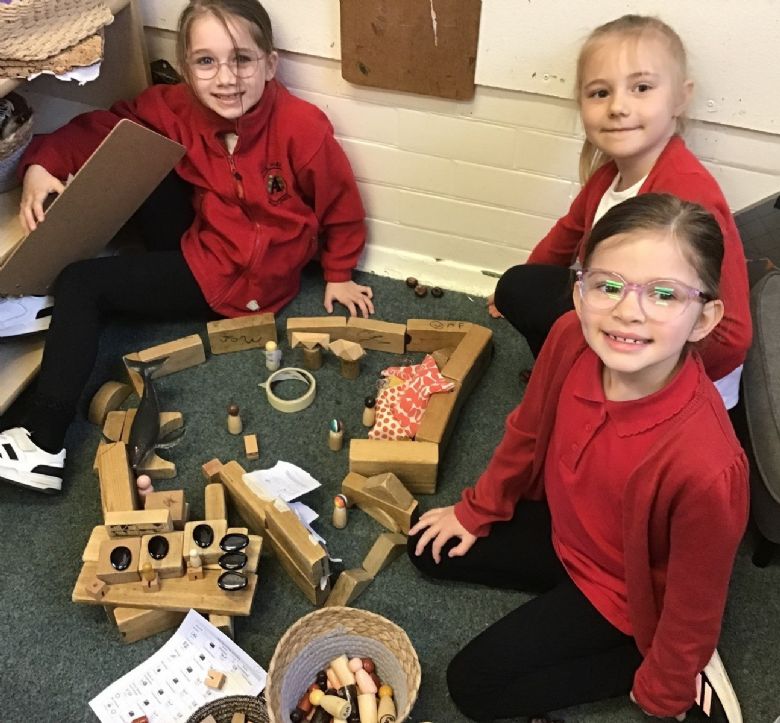
History teaching will introduce key facts and relevant skills and vocabulary related to the curriculum content. Our classroom continuous provision will then be utilised by pupils to demonstrate their knowledge, skills and understanding which will cover the following threshold concepts:
- Investigating and interpreting evidence
- Connections in world history
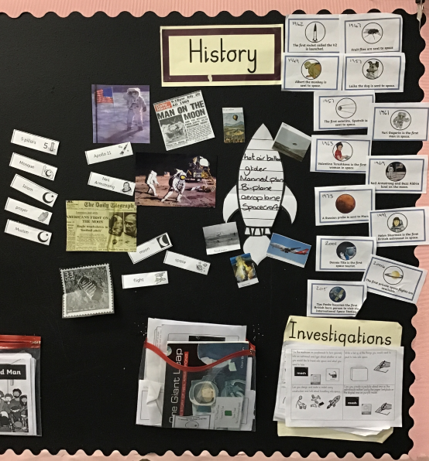
- Chronology
- Historical communication
These key concepts underpin the children’s learning through the year groups from Reception to Year 2. This enables pupils to reinforce and build upon prior learning, make connections and develop subject specific language.
The vertical accumulation of knowledge and skills from Years R to 2 is mapped as follows:
|
PROGRESSION IN THRESHOLD CONCEPTS The procedural and semantic knowledge pupils need to understand the threshold concepts |
| THRESHOLD CONCEPTS | RECEPTION STEP - FOUNDATIONS TO BASIC | YEAR 1 STEP - BASIC | YEAR 2 STEP – ADVANCING TO DEEP |
| H1 – Investigating and interpreting evidence | Beginning to handle evidence and make comments | Use a wider variety of evidence and begin to make comparisons | Use a range of evidence to ask questions and find answers about the past |
|
H2- Connections in world history |
Understand how community and family experiences can impact your own | Understand that significant events will influence the present and future | |
| H3- Chronology | Understand the concept of ‘past’ | Begin to understand short and long term timescales | |
| H4- Historical communication | Begin to know and use some subject specific vocabulary and use in conversation | Know and use subject specific language and begin to use appropriately in verbal accounts | Know and use subject specific language and begin to use appropriately in written accounts |
| THRESHOLD CONCEPTS | HISTORY END POINT |
| H1 – Investigating and interpreting evidence | By the end of Year 2 our children will be able to use a range of historically appropriate words and phrases relating to the past and passing of time. They will be able to explain the events they have studied and recall where they sit within history. Children will also be able to share their knowledge of some significant figures from history that they have learnt about. Pupils will be confident in using their historical knowledge to ask and answer appropriate questions, using evidence to demonstrate how we learn about the past. |
|
H2- Connections in world history |
|
|
H3- Chronology |
|
| H4- Historical communication |
Aspirations For The Future
Pupils develop an understanding of how subjects and specific skills are linked to future jobs.
Here are some of the jobs you could aspire to do in the future as a Historian:
- Archaeologist
- Teacher
- Curator
- Historian
For more careers, please visit First Careers.
For more information, please click to see our exciting Aspirations Week
Assessment
Evidence of pupils’ knowledge and skills is gathered through observation, discussion and specific assessment pieces in continuous provision. As pupils demonstrate their knowledge in a manner meaningful to them, they have ownership of their learning and knowledge is firmly embedded.